Corniche of Alexandria as a public space through the lens of Alain Badiou’s concept of the Event

“Alain Badiou’s concept of “the Event” is a principal idea in his philosophy. The Event refers to a transformative and radical occurrence that changes the normal order of things and introduces the birth of something entirely new. This is defined by Badiou as the ‘state of the situation’. Drawing on Badiou’s philosophy, this essay assumes the COVID-19 pandemic could be considered as Badiou’s Event. On the one hand, it is a social event that led to a new social order, which is, in nature, fundamentally different from the pre-pandemic era”
I extend my deepest appreciation to Dr Ronny Ford.
In response to the outbreak of the COVID-19 pandemic, social distancing measures were implemented to reduce the spread of the virus (Mouratidis, 2021). Many countries, including Egypt, enforced strict regulations to contain the outbreak. In 2020, a curfew was introduced in Egypt starting at 7 p.m. In line with social distancing principles, authorities prohibited all public gatherings and mandated the closure of public and semi-public venues, such as cafes and parks. Notably, during this period, the Corniche of Alexandria, the Mediterranean coastal city, became the only accessible public space. It served as a destination for people looking to escape the confines of their homes or medical facilities. ‘That public space suddenly became more public, evident, ironic, and liberating’ (Bondar, 2015). The approximately 19-kilometre stretch along the seafront has always been the Alexandrians’ refuge and main promenade. Since the construction of the Corniche in the late 19th century, it has acted as a melting pot that attracted individuals from diverse social and economic backgrounds. It granted a neutral public space and helped in shaping the city’s unique cultural identity. ‘Public space is instrumental in the social diversity and education of citizens’ (Bondar, 2015).
Despite the negative health and socio-economic implications of the pandemic, the closure of other public spaces reintroduced the Corniche as the only place of public expression. This shift promoted a temporary feeling of equality and unity among the diverse social groups and enhanced the sense of ownership over public space. However, it was a short-lived experience, a brief moment of public euphoria. This essay hypothesises that the pandemic has redefined the concept of public space and social interaction in Alexandria. Additionally, it argues that the COVID pandemic can be considered a Badiou’s event.
According to Purifoye (2024), the COVID-19 pandemic transformed where people could go, when, and for how long, shaping a new social order through regulations and restrictions. She introduces the concept of ‘Pandemic Spaces’. Those spaces are ‘produced through rules, designs, material, and reformulated use in response to and during a pandemic.’ In the situation of Alexandria, the Corniche was reintroduced as the sole pandemic space. However, even if its function and use have never changed, according to Purifoye, the right to use it has been reformulated. The new regulation of using the Corniche reduced the time during which it was open for public use. That meant densification in the number of users within a tiny linear strip of land, which ultimately led to an increase in their spatial proximity. Pattanaik (2021) observes that ‘The COVID-19 Pandemic has given birth to a new social order, or rather requires the development of new bonds of collective social solidarity in times of physical distancing’. On the one hand, this was a positive impact of the pandemic, but on the other hand, it could be argued that it had created an Anomic Condition. Durkheim used the concept of anomie to describe a social condition in which the earlier norms are replaced with new norms.
Public spaces are significant and unique features of cities. They are not merely passive or decorative mise en scène. They are, in nature, active sites of cultural and social exchange. This nurture is shaped by their social, economic, and political values, which are deeply rooted in the history of city planning. The Greek Agora, Scandinavian Ting, and Slavic Vecha are ancient forms of modern times’ squares and public spaces (Kolegova, 2021). Such spaces have served as places for social interaction, debate, and policymaking. In the case of Alexandria, as a coastal linear city, public spaces have an extra value of visual and social connectivity. Alexandria is geographically a linear stretch of settlements alongside the coastline. It was planned on the grid system. Due to its planning, the squares concept is not highly introduced in the city, compared to the situation in Cairo. That naturally allowed the city’s Corniche to be the only visually connected ‘public blue space’ and Alexandria’s main promenade.
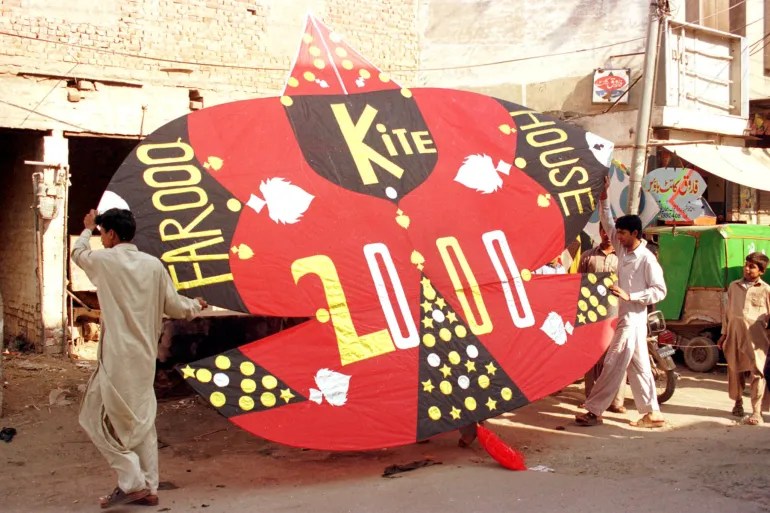
The section of the Corniche located downtown is listed in Alexandria’s national heritage list (2007). This designation adds a cultural dimension to its value. A place that is deeply loaded with historical significance and values, while also being transformed into a pandemic space. During the short period of the curfew in 2020, individuals and groups of different ages, genders, and backgrounds used to gather on the Corniche. Their numbers were increasing as the time of applying the curfew approached. A range of activities were observed, from people walking, sitting, and playing. Notably, kite-flying had surged as a very popular activity. A multitude of young men and boys were seen flying their handmade and colourful kites along the Corniche. In July of the same year, local authorities in Cairo and Alexandria prohibited the manufacturing, possession, and use of kites. The decision came after parliamentary warnings about the potential national security risks posed by those kites. They warned that the kites could be equipped with surveillance cameras (BBC Arabic, 2020). Similar measures were taken in early 2025 in Punjab province, Pakistan, as the Kite-flying has caused injuries and even deaths, making it a danger to public safety.
From another perspective, Allen (2006) observes that the ‘commercialisation of public space has emerged where power works in less than obvious ways, through a logic of inclusion rather than exclusion’. He explains that it was the process of privatisation rather than the gate and fence that controlled entry to public spaces. He noted that ‘power works, not through electronic surveillance technologies or some rule-bound logic imposed from above, but through the experience of space itself, through its ambient qualities’. The Corniche of Alexandria, as a public space, cannot simply be closed or fenced. In addition to serving as the city’s main promenade, it is a crucial mobility axis connecting the east and west sides of Alexandria. Mela (2014) observes that public spaces in contemporary cities require recognising the complex strategies of domestication and pacification, which are directly linked to commodification and privatisation. And, that goes hand in hand with processes of normalisation of citizens’ behaviour. Allen defines what ambient power means as, ‘where the character of a place, its design, layout and inscribed social relations invite us to use it in selective ways and, in this instance, to stage a certain kind of publicness in a privatised space’. In 1992, Sorkin metaphorically stated that ‘there are no demonstrations in Disneyland. In the introduction to his book, ‘Variations on a Theme Park’, Sorkin reflects: ‘The theme park presents its happy and regulated vision of pleasure as a substitute for the public space. The theme park concept is trying to segregate urban functions and limit friction between social groups.
Now there is a need to identify the qualities of a public space. Reijndorp and Hajer (2001) stated that a key characteristic of a real public space is attracting very different groups of people. ‘Good public space functions as public domain, which can be defined as the place of cultural exchange between different groups of city dwellers and visitors’. They continue explaining that, in other words, a real public space is marked by curiosity. A place where people do not choose whom to meet or whom to avoid, that’s where social worlds overlap and cultural exchange happens. In his book Espèces d’espaces, Georges Perec discusses how a space ‘unidentified’ can be transformed into a place. It is all about the concept of daily routine, memory, connection, meanings, and belonging. This notion can be considered another quality of a real public space. It is a space transformed into a place that holds meanings and values for hybrid groups of society. However, Reijndorp and Hajer (2001) argue that a public space can become a non-place, privatised, commercialised, and deprived of its multitude of meanings.
Bibliography
Allen, John. “Ambient Power: Berlin’s Potsdamer Platz and the Seductive Logic of Public Spaces.” Urban Studies 43, 2 (2006): 441-455. https://doi.org/10.1080/00420980500416982.
Awad, F. Mohamed. Italy in Alexandria: Influences on the Built Environment. Alexandria: Alexandria Preservation Trust, 2008.
Badiou, Alain. Being and Event, trans. Oliver Feltham. London: Continuum, 2005.
BBC News Arabic. “حظر تصنيع وحيازة الطائرات الورقية في القاهرة والاسكندرية.” Accessed January 9, 2025. https://www.bbc.com/arabic/middleeast-53382329.
Bodnar, J. “Reclaiming Public Space.” Urban Studies 52, 12 (2015): 2090-2104. https://doi.org/10.1177/0042098015583626.
Caro, A. Robert. The Power Broker: Robert Moses and the Fall of New York. London: Bodley Head, 2015.
Elmouelhi, Hassan, Sara Nowar, Hellen Aziz, Nada Abdrabou, Ahmed Mokhtar Gaballah, and Tayseer Khairy. “COVID-19 Pandemic: Between Public Space and Users’ Behaviours: Case Studies from Egypt, Jordan, and Germany.” The Journal of Public Space 6, 1 (2021): 135-166. https://doi.org/10.32891/jps.v6i1.1435.
Haferkamp, Hans, and Neil J. Smelser, editors. Social Change and Modernity. Berkeley: University of California Press, c1992 1991. http://ark.cdlib.org/ark:/13030/ft6000078s/.
Harvey, David. “The Political Economy of Public Space.” In The Politics of Public Space, edited by Setha Low and Neil Smith, 17–34. New York: Routledge, 2005. https://doi.org/10.4324/9780203390306-2.
Harvey, David. Rebel Cities. New York: Verso, 2012.
Kolegova, Irina. “Does Public Space Shape a Democratic, Peaceful and Healthy Society?” Global Centre on Healthcare and Urbanisation. Accessed January 9, 2025. https://www.gchu.org.uk/2021/04/does-public-space-shape-a-democratic-peaceful-and-healthy-society/.
Mela, Alfredo. “Urban Public Space Between Fragmentation, Control and Conflict.” City, Territory and Architecture 1, 15 (2014). https://doi.org/10.1186/s40410-014-0015-0.
Mitchell, Don. “The End of Public Space? People’s Park, Definitions of the Public, and Democracy.” Annals of the Association of American Geographers 85, 1 (1995): 108-133. https://onlinelibrary.wiley.com/doi/10.1111/j.1467-8306.1995.tb01797.x.
Pattanaik, N. “Pandemic and Society: From the Durkheimian Lens.” The Sociological Review Magazine online (2021). https://doi.org/10.51428/tsr.tkir9508.
Perec, Georges. Espèces d’espaces. Paris: Galilée, 1974.
Purifoye, Gwendolyn. “Seeing a Pandemic: How COVID Changed Urban Spaces and Places.” Visual Studies (2024): 1-16. https://doi.org/10.1080/1472586X.2024.2390146.
Reijndorp, Arnold, and Maarten Hajer. In Search of New Public Domain: Analysis and Strategy. Rotterdam: NAi Publishers, 2001.
Sorkin, Michael, ed. Variations on a Theme Park: The New American City and the End of Public Space. New York: Hill and Wang, 1992.
 Mohamed Gohar